Complaints & escalation Guide 001
Hospital complaint pathway
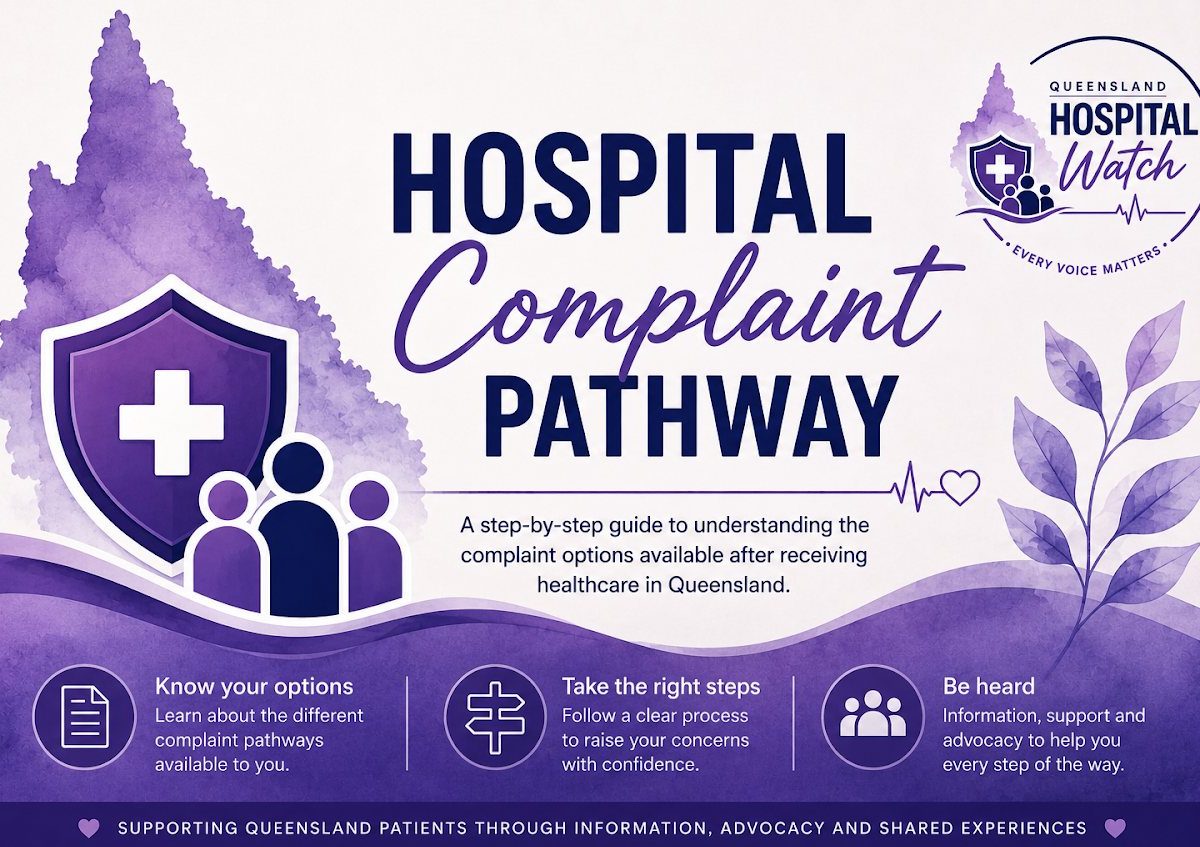
A step-by-step guide to raising concerns and making a complaint about care in a Queensland hospital — and what to do if it isn't resolved.
At a glance
- You can raise concerns about communication, delays, safety, dignity or access to care.
- Start with the treating team or Patient Liaison, then put it in writing.
- If you're not satisfied, you may be able to escalate to the Health Ombudsman.
When should I complain?
You can raise concerns about communication, delays, safety, dignity, access to care or any other part of your healthcare experience. You don’t need to be certain something went wrong to ask questions.
Suggested pathway
-
Speak with the treating team, if appropriate
Many concerns can be resolved by talking directly with the people involved in the care.
-
Contact Patient Liaison
Hospitals have a patient liaison or consumer feedback service that can help resolve concerns.
-
Submit a written complaint
Putting it in writing creates a clear record. See the tips below.
-
Review the response
Check whether it answers your questions and addresses the outcome you asked for.
-
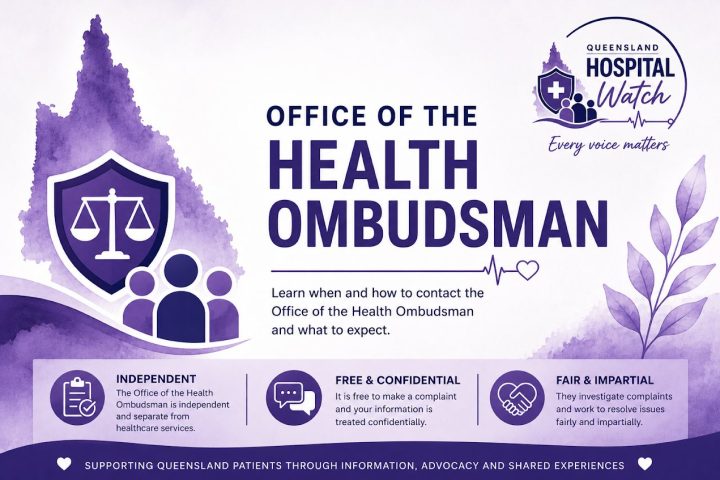
Escalate to the Office of the Health Ombudsman, if appropriate
If you're not satisfied with the response, the OHO may be able to help.
Helpful tips for writing your complaint
- Be factual. Describe what happened rather than what you assume happened.
- Use dates and times. A clear timeline makes your complaint easier to investigate.
- Explain the impact on the patient and family.
- Clearly state the outcome you are seeking — an explanation, an apology, a change in practice, or something else.
Quick checklist
Your ticks stay on this screen only — nothing is sent or saved.
If you need to escalate
-
Office of the Health Ombudsman
Complaints about health services and practitioners in Queensland.
Want a hand with this?
We can help you understand the pathways available, organise your information and point you to the right organisations. We can't give medical or legal advice, but you don't have to work it out alone.
General information only. This guide is not medical or legal advice — seek professional advice for your circumstances. In an emergency, call 000.